
Duration
14 Days
Everest Region
Moderate /challenging
| Departure Date | Duration | Package Cost | Availability | Action |
|---|---|---|---|---|
| 30 Jul 2026 | 14 Days | USD 1300
|
8 Seats | |
The Everest Base Camp Trek is not just a journey to the base of the world’s highest mountain—it is a life-changing Himalayan experience that combines breathtaking landscapes, deep cultural immersion, and the warm hospitality of the legendary Sherpa people.
Breathtaking Himalayan Views
From the very beginning of the journey, you will witness some of the most spectacular mountain scenery in the world. Snow-covered giants such as Mount Everest (8,848.86m), Lhotse, Nuptse, Ama Dablam, and Thamserku rise above the clouds, creating a magical panorama at every step.
Sunrise views from places like Namche Bazaar and Kala Patthar offer golden light touching the peaks—an unforgettable moment that stays with you forever.
Every day of the trek brings a new landscape—lush green forests, deep river valleys, suspension bridges, glaciers, and high alpine terrain.
One of the most special parts of this journey is meeting the Sherpa people, the heart of the Everest region. Known worldwide for their strength, kindness, and mountain expertise, Sherpas have a deep spiritual connection with the Himalayas.
Sherpa culture is peaceful, spiritual, and deeply connected to nature. Their way of life gives you a true sense of calm and respect for the mountains.
During the trek, you will enjoy fresh, warm, and energy-rich local meals in traditional teahouses.
Popular foods include:
Food is simple but fresh, warm, and perfectly suited for trekking energy.
The Everest Base Camp trek is challenging, but also incredibly enjoyable and refreshing. Every day feels like a new adventure.
You will enjoy:
It is a perfect escape from city life—clean air, calm environment, and total mental refreshment.
Reaching Everest Base Camp is a proud and emotional achievement. Standing at the foot of the world’s highest peak gives you a feeling of success, strength, and connection with nature.
For even more dramatic views, the hike to Kala Patthar (5,545m) offers the closest and clearest view of Mount Everest itself.
Why Choose Summitlaya Adventure?
Join Summitlaya Adventure and experience the perfect blend of nature, culture, adventure, and peace in the heart of the Everest region.
This is not just a trek—it is a memory for life.
The Everest Base Camp (EBC) trek is a classic 130 km (80 mile) round-trip journey from Lukla. A standard itinerary typically takes 12 to 14 days to allow for essential acclimatization Day Route Distance Approx. Time AltitudeTotal Distance: ~130 km (80 miles) round trip.
some deatils here
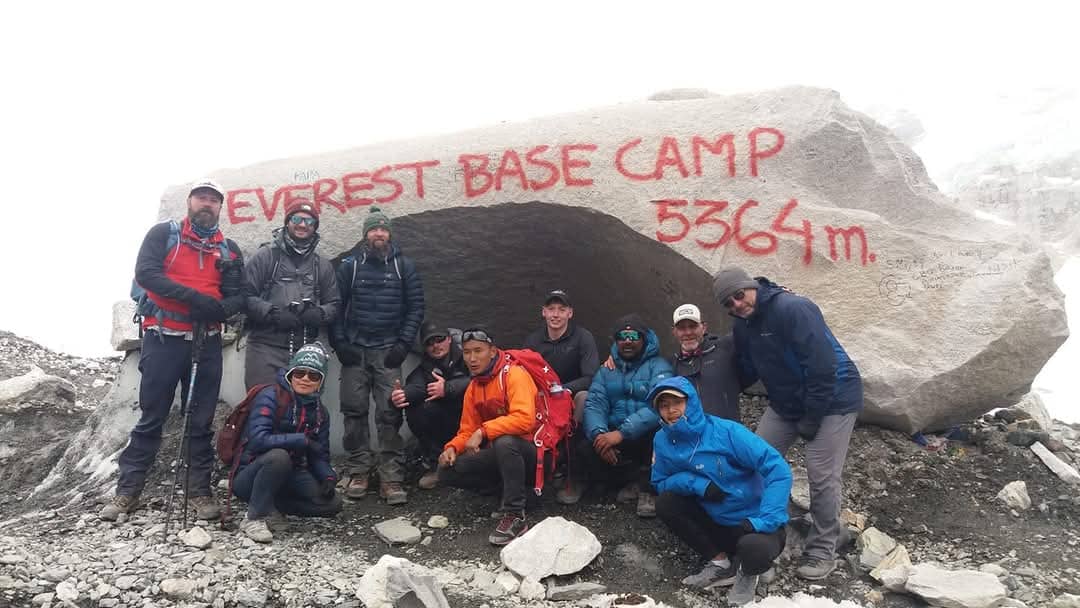
Trek from Lobuche to Gorak Shep (5260m) and Everest Base Camp (5364m) Details
In Nepal, it is customary to tip guides and porters. While this might feel unfamiliar, it means a great deal to those looking after you during your journey.
You can give the tips to your head guide at the end of the trip, and they will then be distributed among the entire team. To ensure full transparency, the head guide will distribute the tips to the guides and porters in your presence. Generally, guides receive a larger share of the tips than porters, as they are more highly qualified.
A good rule of thumb is about $140 per person for tips, though the final amount is entirely up to you. If you would like to give an additional tip to a specific team member who supported you personally, please do so directly and privately
For a trek with Summitlaya Adventure your gear needs to be versatile enough to handle the intense temperature swings of the Himalayas ranging from 25°C in the lower valleys to -15°C at high-altitude camps.
Here is the essential gear list for a successful trek in 2026.
In the mountains, "cotton is rotten." Stick to moisture-wicking synthetic or merino wool fabrics.
5.Note: Most of this technical equipment can be rented through Summitlaya or in Thamel/Namche Bazaar if you don't want to fly with it.
The trek is graded as moderate to challenging. You don’t need technical climbing skills, but you do need solid physical endurance. You will be walking on rocky, uneven terrain for 5 to 7 hours a day at high altitudes.
Our standard, safety-first itinerary is 14 days. This includes the flight to Lukla and two mandatory acclimatization days to ensure your body adjusts properly to the altitude.
While Base Camp sits at 5,364m, we typically hike to the top of Kala Patthar (5,545m) for the most spectacular sunrise view of Mt. Everest, Lhotse, and Nuptse
Our guides are trained to monitor your oxygen levels and heart rate daily. If you show symptoms of AMS, the primary protocol is to descend. In serious cases, we coordinate immediate helicopter evacuation.
Yes. You must have insurance that specifically covers emergency helicopter evacuation and medical expenses up to 6,000 meters.
We advise against drinking tap or stream water. You should use water purification tablets, a LifeStraw, or buy boiled water at the teahouses.
A heavy down jacket (rated for -15°C).
Waterproof trekking boots (well broken-in).
Thermal base layers and moisture-wicking shirts.
A 4-season sleeping bag.
Personal medical kit and sun protection.
The weight limit is strictly 15kg (33 lbs) per person, which includes your main duffel bag and your daypack.
Yes, most teahouses offer charging stations and Wi-Fi (via Everest Link) for a small fee. However, service can be intermittent due to weather and altitude.
You will eat primarily at teahouses. The most popular and sustained energy source is Dal Bhat (lentils, rice, and vegetable curry). You can also find pasta, potatoes, eggs, and pancakes. We recommend staying on a vegetarian diet during the trek to avoid foodborne illness from meat transported up-mountain.
We stay in local teahouses. These are twin-share rooms with basic wooden beds and mattresses. While simple, they provide a warm, communal atmosphere and a roof over your head.
Most treks begin with a flight from Kathmandu or Manthali (Ramechhap) to Lukla. Summitlaya Adventure handles all flight logistics and airport transfers for you.
Most nationalities can obtain a Visa on Arrival at Tribhuvan International Airport in Kathmandu. Ensure your passport is valid for at least six months
During the peak trekking seasons (especially in spring and autumn), flights to Lukla Airport may operate from Manthali Airport (Ramechhap) instead of Kathmandu due to high air traffic at Tribhuvan International Airport.
Manthali is located approximately 4–5 hours’ drive from Kathmandu, and flights from here to Lukla are short (around 20–25 minutes). Travelers are usually required to leave Kathmandu very early in the morning (around 1:00–3:00 AM) to catch the flight on time.
This arrangement is managed by airlines to reduce congestion and improve flight safety to Lukla, which is highly dependent on weather conditions.
We always recommend our clients remain flexible with flight schedules. In case of delays or cancellations, alternative options such as helicopter flights can be arranged (at additional cost).
No reviews yet for this package. Be the first to review !
